
Specializing in hair transplantation, hair restoration and hair transplants with hair loss clinics in New Jersey (NJ) & New York (NY)

FOLLICULAR UNIT EXTRACTION (FUE)

One of the newest and most talked about method in hair transplantation is a procedure known as follicular unit extraction and transplantation, commonly known referred to as FUE transplantation.

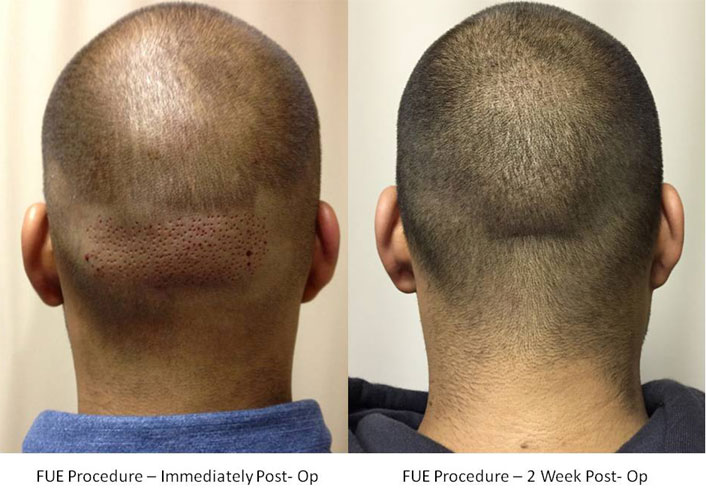
The FUE transplantation procedure itself involves a different approach to extraction that pinpoints individual follicular grafts from the donor area as opposed to more traditional linear strip extraction. Each follicular unit graft, or compact bundle of 1 to 4 hair follicles, replete with oil glands, muscle and connecting tissue is removed individually and transplanted to the affected hair loss area.

An excellent procedure for selected patients. The transplantation procedure does not result in a linear scar which maybe a serious consideration for those who wear their hair short and wish to avoid a linear excision. Patients with very tight scalps or that have existing donor scarring that cannot be excised may also be good candidates.

The most significant drawback to follicular unit extraction (FUE) transplantation is the limit of donor supply and because each follicular unit is removed individually, the procedure takes a considerably larger amount of time. As such, each procedure is limited to approximately 500 grafts per session and the cost of each graft is almost double that of the standard linear extraction procedure.

THE FUE PROCEDURE

Unlike the standard single-strip excision, in which the strip is removed from the donor site and then dissected into follicular unit grafts, follicular unit extraction (FUE) takes each graft individually, one by one, from all over the side and back of the scalp. Each graft consists of 1, 2, 3, and sometimes 4 hairs. The main goal of the procedure is to minimize the effects of scarring and utilize donor hair situations previously not operable such as tight scalp or limited scarred donor areas.

While the FUE procedure has grown in popularity, the standard linear strip excision is still the most popular hair transplant procedure. In single-strip excision, the patient is left with a thin, pencil-like linear scar once the donor site is sutured closed. In FUE there is no wound to suture, so the area is left to heal on its own with what some believe as less noticeable scarring and no tightness of the scalp.

WHO IS A CANDIDATE FOR FUE?

Patients who might benefit from a FUE procedure as opposed to the traditional transplant would be patients whose donor area is limited due to tightness of the scalp or those who tend to heal with wide scars after suturing.

Regardless, it is important to meet with the doctor personally to evaluate and address your individual needs, concerns, and expectations. Patients should be aware that though FUE has the potential to minimize the appearance of scarring, it cannot eliminate it entirely.


100% Financing Available. Apply Now.

Can't Find the Answer?

Email IHSG your specific question

Our surgical technicians and staff are available to help you find the hair loss solution that works for you and answer any questions you have regarding hair restoration and hair transplantation surgery.